

Protecting Privacy in the Age of EMRs and EHRs: Canada’s Digital Health Challenge
Ensuring Patient Privacy While Embracing Digital Health Systems

Canada’s healthcare system is at a pivotal moment, where digital transformation is shifting from aspiration to necessity.
As discussed in our previous analyses on modernizing digital health records and Canada’s global standing in health digitization, the adoption of electronic health systems represents both an opportunity and a challenge.
These systems promise to enhance patient outcomes, streamline operations, and foster data-driven care. However, achieving this vision requires addressing critical barriers in interoperability, accessibility, and security.
This article examines the progress, hurdles, and opportunities shaping Canada’s digital health landscape and what it means for the future of patient care and innovation.
Progress in Electronic Health Records
Canada has made significant strides in modernizing health records over the past two decades. According to a report by CIHI, nearly all clinicians now use some form of electronic medical records (EMRs), with 93% of primary care physicians reporting usage in 2022, up from 73% in 2015.
However, the challenge remains in making this data easily accessible to patients and shareable among providers.
To address this, Canada is implementing the Shared Pan-Canadian Interoperability Roadmap, aiming to create a digitally connected and secure healthcare information system.
Key initiatives include:
Developing common standards for seamless data flow among healthcare facilities, sectors, patients, and providers.
Increasing investments in technologies to make health information more available.
Encouraging the use of electronic health records (EHRs) to reduce pressure on healthcare systems.
Alberta’s MyHealth Records platform has transformed patient access to health information by allowing individuals to view lab results, medications, and immunizations online.
This shift reduces the administrative burden on physicians while empowering patients to take a more active role in their care. However, the platform’s convenience also underscores the need for robust privacy safeguards, as increased accessibility heightens the risk of data breaches.
Ensuring secure access while maintaining patient trust is critical to the platform’s continued success and serves as a model for balancing usability with privacy in digital health systems.
Impact on Patient Care
A 2023 study from the Canadian Institutes of Health Information highlighted that more than 4 in 5 Canadians felt better equipped to manage their health after accessing their electronic medical records. Moreover, 34% of Canadians who accessed their records electronically avoided a trip to the emergency department, and 45% avoided an in-person visit with their regular care provider. This underscores the potential of digital health tools to enhance patient autonomy and reduce system strain.
Challenges in Digital Health Adoption
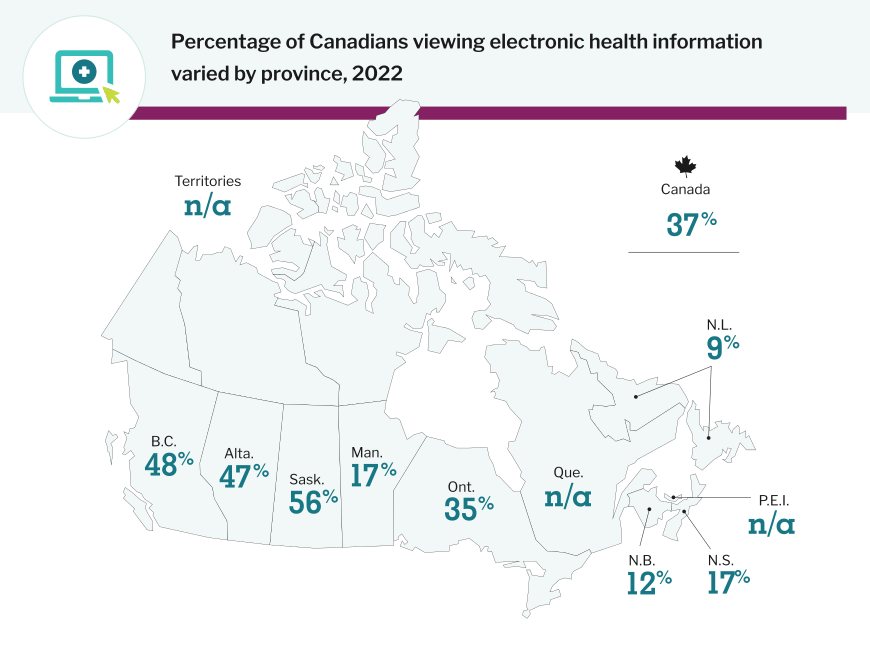
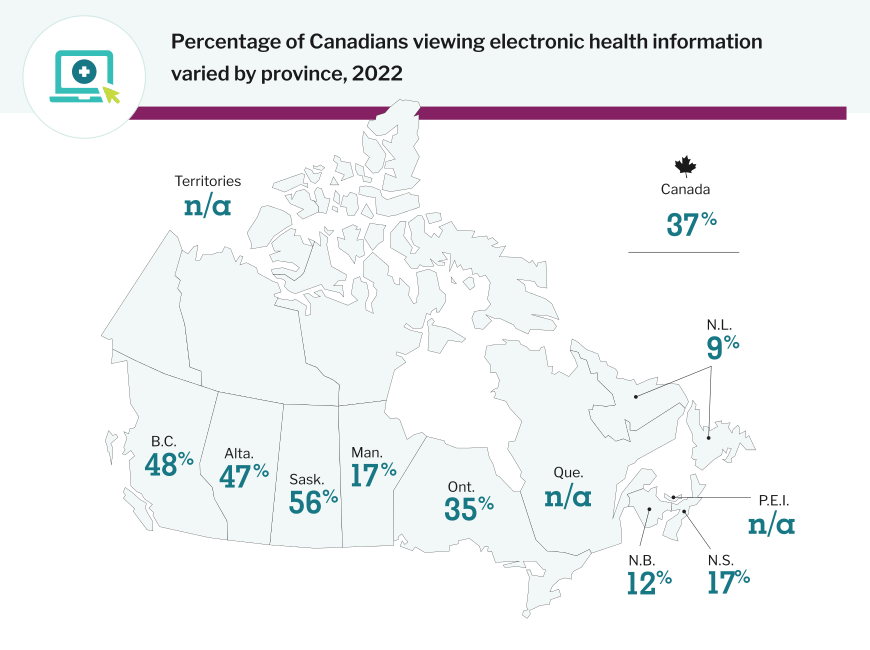
Despite these advancements, Canada lags behind other high-income countries in terms of electronic health information access. An international survey found that only 35% of Canadians accessed their health information online in the past two years, compared to an average of 45% in other countries. The primary barrier to information sharing among providers is the lack of common technical standards, with only 29% of Canadian physicians sharing patient clinical summaries electronically with external care providers.
Privacy and Security Concerns
The Privacy Commissioner of Canada emphasizes the importance of securing public trust in digital healthcare. As electronic health records (EHRs) become more prevalent, ensuring their security and interoperability is crucial. The Personal Information Protection and Electronic Documents Act (PIPEDA) provides a framework for protecting personal health information, but healthcare providers must remain vigilant against unauthorized access and cybersecurity threats.
Opportunities and Challenges in Digital Healthcare
The rapid growth of digital technologies presents both opportunities and challenges. While tools like big data analytics, wireless sensors, and mobile engagement enhance healthcare delivery, they also introduce privacy and security concerns. Researchers and healthcare providers must develop cyber-situational awareness to protect sensitive data from sophisticated cyber threats.

Challenges and opportunities in digital healthcare include:
Ensuring secure and interoperable electronic health records.
Addressing privacy concerns and compliance with federal and provincial laws.
Enhancing digital health literacy among patients and providers.
Putting it all Together
The Canadian Institute for Health Information (CIHI) reports that less than 40% of Canadians have accessed their health information online. This low level of electronic communication is concerning, as it may compromise patient safety. Improved sharing of electronic health information is essential for better patient experiences and safer, higher-quality care.
What steps can policymakers, innovators, and healthcare providers take to bridge gaps in access and security?
How can Canada’s healthcare system leverage digital tools while safeguarding patient privacy?
Share your insights and join the conversation as Canada navigates this critical transformation.
References
Canadian Institute for Health Information. (2024). Taking the pulse: Measuring shared priorities for Canadian health care. Retrieved from https://www.cihi.ca/en/taking-the-pulse-measuring-shared-priorities-for-canadian-health-care-2024/canadians-and-health-care-providers-want-connected-electronic-health-information
Office of the Privacy Commissioner of Canada. (2022). Joint resolutions with provinces and territories. Retrieved from https://www.priv.gc.ca/en/about-the-opc/what-we-do/provincial-and-territorial-collaboration/joint-resolutions-with-provinces-and-territories/res_220921/
PMC. (2016). The rapid growth of digital technologies. Retrieved from https://pmc.ncbi.nlm.nih.gov/articles/PMC4859641/
Canadian Institute for Health Information. (2023). Better access to electronic health. Retrieved from https://www.cihi.ca/en/taking-the-pulse-a-snapshot-of-canadian-health-care-2023/better-access-to-electronic-health
Read Our First Article & Share Your Ideas
If you missed it, be sure to check out our first article here, where we covered key reasons why we started our Canadian Health Tech newsletter.
We’d also love to hear from you! What topics would you like us to explore next? Reply to this email or leave a comment with your suggestions – we’re always looking to provide valuable insights based on what matters to you.
We’ll continue to keep you informed about the latest developments and their impact on healthcare and tech in Canada. Stay tuned for more updates, and feel free to share your thoughts or questions with us!
